
2009 Reunion Reminder & Alert

Shipmates,

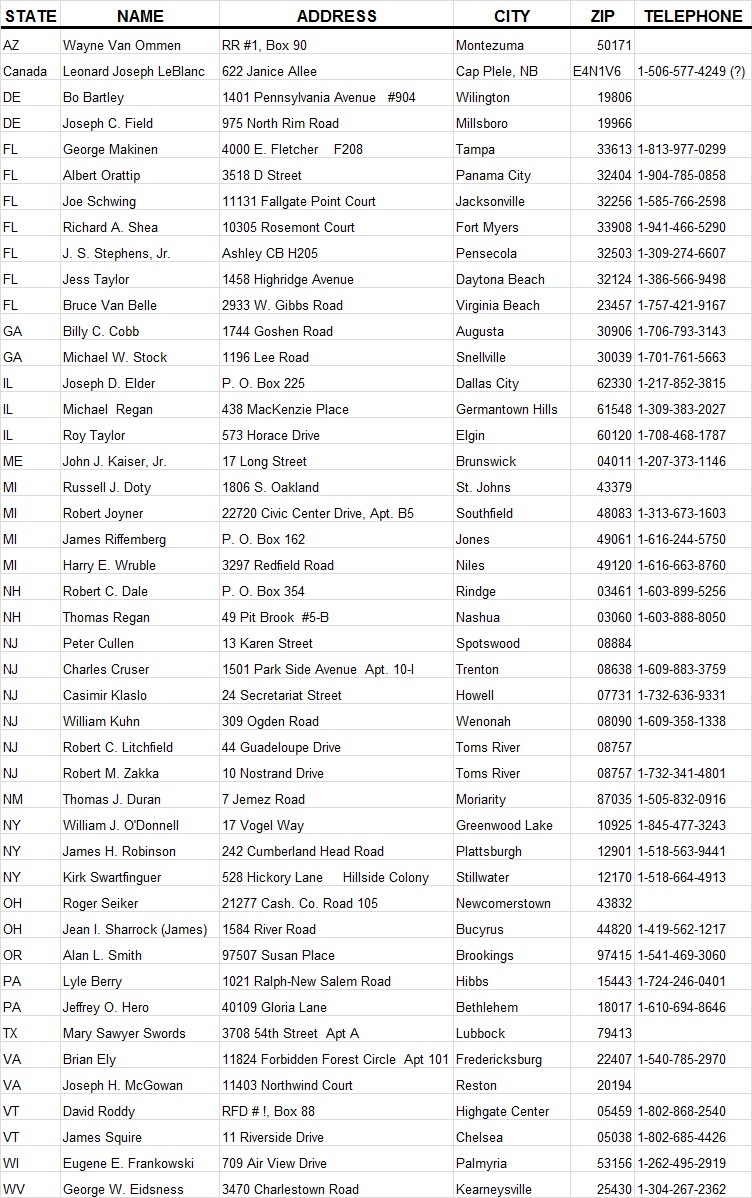
Today was to have been the last day for reservations to be received here in beautiful North Idaho. We are significantly short in numbers compared to the last few reunions but enough are coming to ensure that we will hold the reunion. I believe that the state of the national economy has been a contributing factor but not the total explanation. I have been in contact with our hotel and they agree with me as to the poor economy’s impact. With this understood I am going to extend the deadline to July 14th 2009. That will give any one that has been sitting on the fence time to get their forms in to me.

We have on hand - and will be receiving more - many excellent drawing prizes and with the lower numbers the chances of winning one of them are greatly improved. So, check the website for the reservation forms, fill them out, and write that check, drop both items into an envelope and send them off.

I know that there are many out there that tend to procrastinate until the last minute. Well, the last minute is here - so get cracking. For those coming from the northeast and upper mid-west Spokane is served by North West Airlines. From the southeast and lower mid-west Delta and Southwest both serve Spokane. Fares are lower than they have been so grab the opportunity to come be in Post Falls in September. Hope to see you there.”

Gil Beyer, Reunion Host

Idaho Click the Idaho license plate to visit the 2009 Reunion Page.   You will find your reservation forms there.

Want to learn more about "tin cans"?

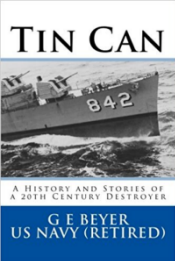
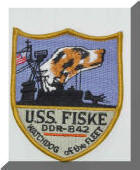
We are proud members of an elite group of veterans.  All of us have served on those fighting ships called "tin cans".  They're called "tin cans" because of their thin skinned hulls.  Built very quickly during World War II (and earlier), these ship were designed to be fast and deadly to the enemy.  Equipped with many guns and torpedoes, the destroyer was to "go in harms way".  They were expendable.  Many were sunk or damaged with much loss of life.  Our pride is in one of those "cans" called the USS Fiske.  It began its life as a destroyer (DD), later became a radar picket destroyer (DDR), and then returned to the DD classification.  She ended her career with the Turkish navy in the 90's.  To learn more about our ship, click the Ship's History button you see off to port.

A closer look at a "tin-can"...

The Fiske, DD842, and J. P. Kennedy, DD850 were built from almost the same plans.  While our sister-ship survived, the Fiske did not.  The Kennedy is currently at Battleship Cove, MA serving as a museum ship.  A crew of volunteers are trying to re-built her to the original configuration she, and the Fiske, had while serving together.  We've gathered pictures from the Kennedy that just as easily could have been taken of the Fiske. 
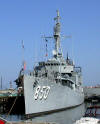
USS JPKennedy DD850Click this thumbnail to visit the Fiske/Kennedy Pictures page:


The Tin Can Navy

To lean more about destroyers, click the link that follows to visit our sister organization, Tin Can Sailors.  To see what's going on in today's navy, click the link that follows: NAVY.COM.

General Information about Ships

Click on Hazegray And Underway to find information from many sources.

Join the Fiske Association

Join the Association by clicking on the Join-up button off to port.


...Hey, shipmates!...If you'd like to join the USS Fiske Association, click on the Join-up button off to port and send $10 to the address shown...Our 2009 Reunion is September 24 through 27, 2009 in Post Falls, Idaho...Welcome aboard...

Independence Day

In the United States, Independence Day, commonly known as the Fourth of July, is a federal holiday commemorating the adoption of the Declaration of Independence on July 4, 1776, Fireworkscelebrated in 2009 on Friday, July 3rd.  Independence Day is commonly associated with fireworks, parades, barbecues, carnivals, picnics, concerts, baseball games, political speeches and ceremonies, and various other public and private events celebrating the history, government, and traditions of the United States.

History

During the American Revolution, the legal separation of the American colonies from Great Britain occurred on July 2, 1776, when the Second Continental Congress voted to approve a resolution of independence that had been proposed in June by Richard Henry Lee of Virginia.  After voting for independence, Congress turned its attention to the Declaration of Independence, a statement explaining this decision, which had been prepared by a committee but with Thomas Jefferson as its principal author.  Congress debated and revised the Declaration, finally approving it on July 4.  A day earlier, John Adams had written to his wife Abigail: "The second day of July, 1776, will be the most memorable epoch in the history of America.  I am apt to believe that it will be celebrated by succeeding generations as the great anniversary festival.  It ought to be commemorated as the day of deliverance, by solemn acts of devotion to God Almighty.  It ought to be solemnized with pomp and parade, with shows, games, sports, guns, bells, bonfires, and illuminations, from one end of this continent to the other, from this time forward forever more."

In a remarkable series of coincidences, both John Adams and Thomas Jefferson, two founding fathers of the United States and the only two men who signed the Declaration of Independence to become president, died on the same day: July 4, 1826, which was the United States' 50th anniversary. President James Monroe died exactly five years later, on July 4, 1831, but he was not a signatory to the Declaration of Independence.

Past Observances

  • In 1777, thirteen guns were fired, once at morning and again as evening fell, on July 4 in Bristol, Rhode Island. Philadelphia celebrated the first anniversary in a manner a modern American would find quite familiar: an official dinner for the Continental Congress, toasts, 13-gun salutes, speeches, prayers, music, parades, troop reviews, and fireworks. Ships were decked with red, white, and blue bunting.
  • In 1778, General George Washington marked July 4 with a double ration of rum for his soldiers and an artillery salute. Across the Atlantic Ocean, ambassadors John Adams and Benjamin Franklin held a dinner for their fellow Americans in Paris, France.
  • In 1779, July 4 fell on a Sunday. The holiday was celebrated on Monday, July 5.
  • In 1781, the Massachusetts General Court became the first state legislature to recognize July 4 as a state celebration.
  • In 1783, Moravians in Salem, North Carolina, held a celebration of July 4 with a challenging music program assembled by Johann Friedrich Peter. This work was titled "The Psalm of Joy".
  • In 1791 the first recorded use of the name "Independence Day" occurred.
  • In 1870, the U.S. Congress made Independence Day an unpaid holiday for federal employees.

Customs

Independence Day is a national holiday marked by patriotic displays. Similar to other summer-themed events, Independence Day celebrations often take place outdoors.  Many politicians make it a point on this day to appear at a public event to praise the nation's heritage, laws, history, society, and people.

Independence Day fireworks are often accompanied by patriotic songs such as the national anthem "The Star-Spangled Banner", "God Bless America", "America the Beautiful", "My Country, 'Tis of Thee", "This Land Is Your Land", "Stars and Stripes Forever", and, regionally, "Yankee Doodle" in northeastern states and "Dixie" in southern states. Some of the lyrics recall images of the Revolutionary War or the War of 1812.  Firework shows are held in many states.

Back Topside